Top 5 Questions to Ask a Sportsbook Provider Before You Sign
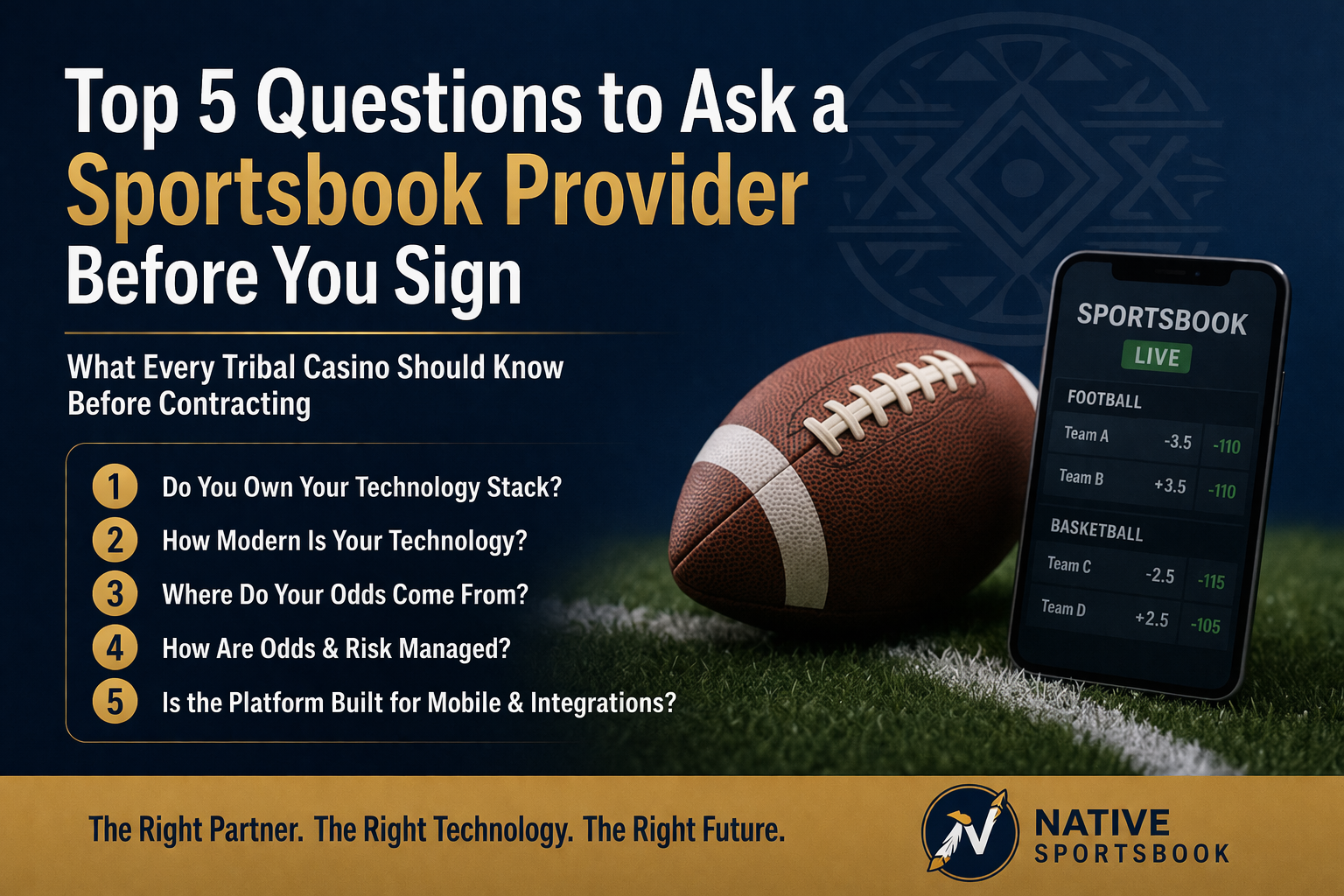
Discover the 5 critical questions tribal casinos must ask sportsbook providers before signing a contract. Reduce risk, increase profitability, and maintain long-term control with the right sportsbook technology partner.
Introduction: Why Choosing the Right Sportsbook Partner Matters
As tribal sports betting continues to expand across the U.S., operators are facing a critical decision: who powers your sportsbook matters just as much as offering one at all.
The wrong provider can limit flexibility, increase operational risk, and cap long-term revenue potential. The right partner can enhance tribal sovereignty, unlock new revenue streams, and create a fully customized player experience.
Before signing any agreement, here are five essential questions every tribal operator should ask.
1. Do You Own Your Technology Stack?
Why this matters for tribal casinos
Understanding whether a sportsbook provider owns its technology—or relies on third-party systems—is critical.
Providers with fully in-house technology can offer:
Customization tailored to tribal operations
Flexible reporting for accounting, audit, and liability management
Faster feature development and deployment
True product differentiation in competitive markets
By contrast, outsourced or “white-label” platforms often limit customization and control.
👉 Tribal operators should prioritize sportsbook platforms that enable custom workflows, regulatory reporting, and property-level control.
2. How Modern Is Your Technology?
The risk of outdated sportsbook platforms
Legacy sportsbook systems can introduce serious operational risks:
Increased downtime and instability
Slower data processing and odds updates
Limited ability to integrate new gaming features
Reduced betting markets due to bandwidth constraints
In a fast-moving betting environment, latency and stale odds directly impact profitability and risk exposure.
Modern platforms are built for:
Real-time data processing
High-volume wagering
Seamless integration with emerging gaming technologies
👉 Evaluate providers based on scalability, uptime reliability, and system latency.
3. Where Do Your Odds Come From?
Transparency is critical
Not all odds are created equal.
Many sportsbook providers rely on:
Third-party resellers
Tier 2 or international odds feeds
This can lead to:
Less competitive lines
Increased exposure to arbitrage
Reduced player trust
Top-tier providers use Tier 1 U.S.-based odds sources, offering:
More accurate and competitive pricing
Faster updates
Better alignment with U.S. betting markets
👉 Always demand odds transparency and Tier 1 sourcing to reduce risk and improve competitiveness.
4. How Are Odds and Risk Managed?
In-house vs outsourced trading
A key differentiator between sportsbook providers is how they manage odds and risk.
Many providers:
Passively display vendor odds
Outsource trading and risk management
This creates:
Delays in adjusting lines
Limited control over exposure
Missed opportunities to optimize margins
Providers with in-house trading teams can:
Adjust odds in real time
Customize risk strategies at the property level
React instantly to betting patterns
👉 Look for providers with in-house risk management and trading capabilities.
5. Is the Platform Built for Mobile and Integrations?
Future-proofing your sportsbook
The future of tribal gaming is connected, mobile, and integrated.
Your sportsbook platform should:
Seamlessly connect retail and mobile betting
Support mobile and Class II gaming expansion
Integrate with loyalty, marketing, and engagement tools
Unlock additional revenue streams
Without integration capabilities, operators risk being locked into a limited ecosystem with constrained growth potential.
👉 Choose platforms that support mobile-first experiences and flexible integrations.
Conclusion: Control, Flexibility, and Long-Term Success
For tribal operators, sportsbook technology is more than a vendor decision—it’s a strategic partnership that impacts sovereignty, profitability, and long-term growth.
By asking these five questions, you can:
Avoid restrictive contracts
Reduce operational and financial risk
Build a scalable, future-ready sportsbook
The right partner doesn’t just provide a sportsbook—they provide the tools to own and control your gaming future.
Building the Right Sportsbook for the Future
Tribal operators deserve more than one-size-fits-all sportsbook solutions. The most successful operations are built on technology that prioritizes control, flexibility, and long-term scalability—while aligning with the unique needs of tribal gaming enterprises.
At Native Sportsbook, we focus on delivering fully customizable, in-house technology, transparent odds sourcing, and integrated risk management designed specifically for tribal operators. By combining retail, mobile, and modular platform capabilities, we help casinos create sustainable, high-margin sportsbook ecosystems that extend far beyond traditional wagering.
If you’re evaluating sportsbook providers, it’s worth understanding what true platform ownership and customization can unlock for your operation.
